Homemade Tortilla Chips — Fried or Baked
Kitchen guide

Homemade Tortilla Chips — Fried or Baked

Help visitors handle Homemade Tortilla Chips — Fried or Baked with a clear, practical checklist grounded in real examples.

Arizona kitchens, cuts, and counter know-how
Published July 15, 2026
Briefing

This guide covers both traditional deep-frying and a lighter baked method, so you can choose the approach that best fits your kitchen setup and dietary preferences.

Homemade Tortilla Chips Recipe (Fried or Baked)

RECIPE: https://www.inspiredtaste.net/48859/tortilla-chips/ Skip the store-bought bag and make homemade tortilla chips instead!

  • Channel: Inspired Taste

Video source: Inspired Taste

Rapid read

Key takeaways

  • 01Homemade is easier to study when it is tied to a concrete directing choice instead of treated as style decoration.
  • 02Corn Tortillas – No need to get fancy and make your own corn tortillas. This is an easy recipe, so store-bought corn tortillas (preferably stale or slightly dried out) will work perfectly.
01

The foundation of great homemade chips starts with your base. Store-bought corn tortillas work perfectly here—there’s no need to make them from scratch. Slightly stale or dried-out tortillas actually hold up better during cooking. For frying, reach for a neutral oil with a high smoke point like canola, vegetable, peanut, or grapeseed. Canola is a reliable, budget-friendly choice that won’t overpower the corn flavor.

Salt selection matters more than you might expect. Coarse kosher salt is ideal because the larger flakes distribute evenly and stick well without overwhelming the natural corn taste.

  • 01Use slightly dried corn tortillas rather than fresh, pliable ones for better crispness.
  • 02Stick to high-heat neutral oils to prevent burning and off-flavors.
  • 03Choose coarse kosher salt for even, controlled seasoning.
Homemade Tortilla Chips — Fried or Baked
02

Consistency is key when shaping your chips. Stack two tortillas at a time and slice them into six to eight wedges each. Aim for uniform sizes so every piece cooks at the same rate.

Whether you’re frying or baking, uneven cuts will lead to some chips burning while others remain soft. A sharp knife or kitchen shears will give you the cleanest edges with the least effort.

  • 01Stack tortillas to cut faster and maintain consistent wedge sizes.
  • 02Aim for 6–8 wedges per tortilla as a reliable starting point.
  • 03Keep edges even to ensure uniform crispness across the batch.
Homemade Tortilla Chips — Fried or Baked
03

You have two reliable paths to crispy chips. Traditional frying delivers that classic restaurant-style texture and rich flavor. Heat your oil to around 350°F (175°C) and carefully lower the wedges in batches to avoid overcrowding.

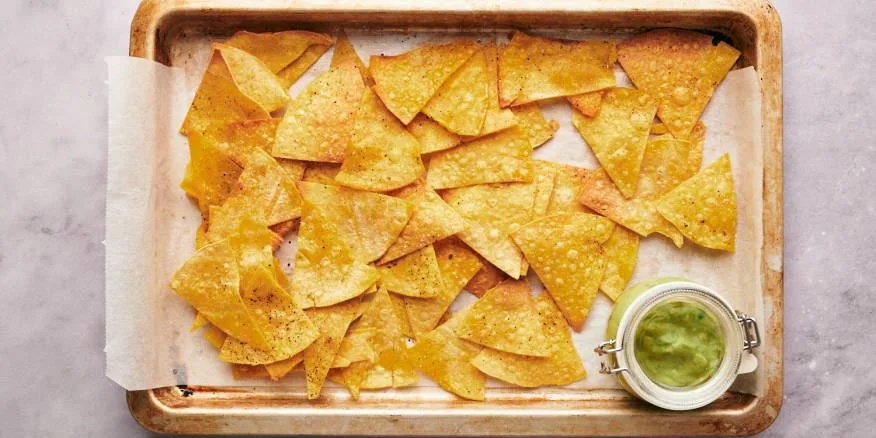
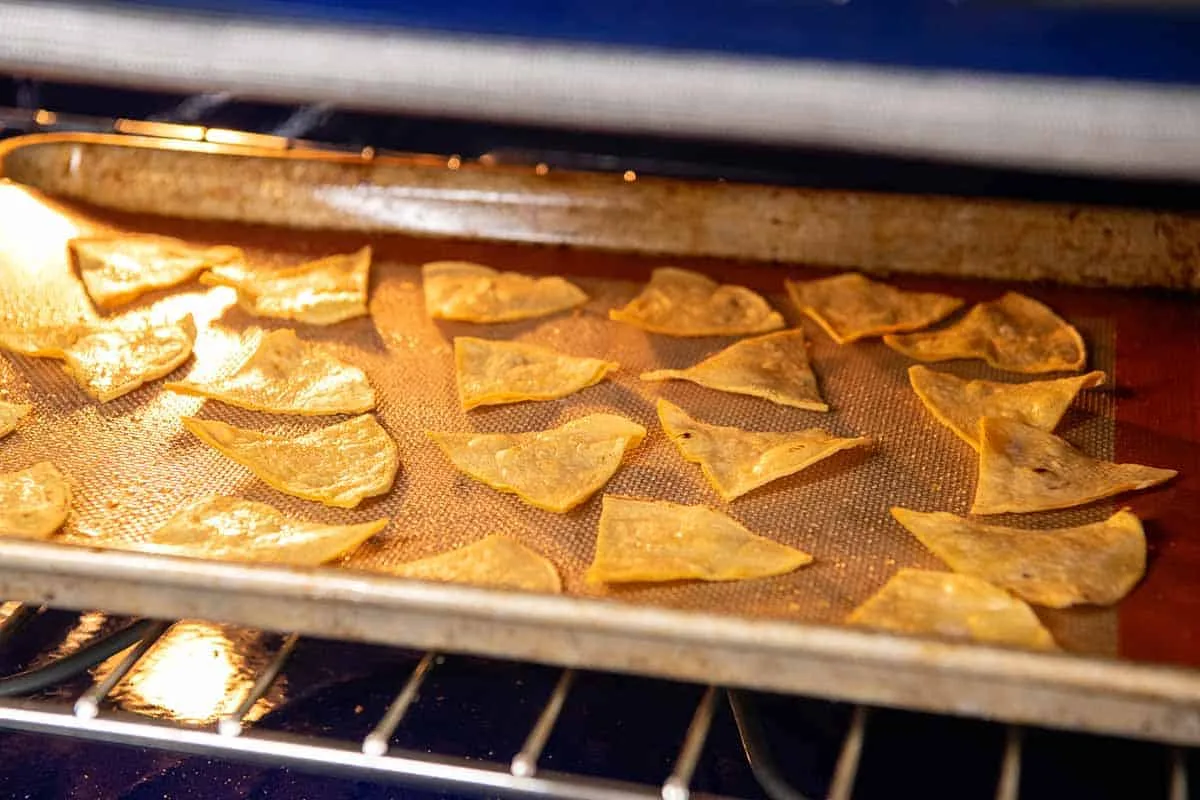
For a lighter option, baking is surprisingly effective. Toss the cut wedges with a light spray or drizzle of oil, arrange them on a parchment-lined sheet, and bake until golden. The baked method uses significantly less oil, making it easier to clean up and more budget-friendly.

  • 01Fry in small batches to maintain steady oil temperature and prevent sogginess.
  • 02Bake at 400°F (200°C) for 12–15 minutes, flipping halfway through.
  • 03Watch closely during the last few minutes to prevent scorching regardless of method.
Homemade Tortilla Chips — Fried or Baked
04

Once cooked, immediate attention prevents mushy chips. For fried batches, transfer them directly to a paper towel-lined plate using a slotted spoon or tongs to drain excess oil. The residual heat helps the salt adhere properly.

If you’re baking, let them cool briefly on the sheet before seasoning. Get creative with your spice blend—lime zest, chili powder, garlic powder, or dried herbs all work beautifully. Always apply dry seasonings after cooking to prevent burning in hot oil.

  • 01Season immediately while the chips are still hot so spices stick and bloom.
  • 02Use a slotted spoon or paper towels to remove excess oil without breaking the chips.
  • 03Add dry seasonings after cooking to avoid bitter, charred flavors.
05

A few small habits will keep your chips crisp and your kitchen safe. While some sources suggest freezing leftover chips to extend shelf life, it’s generally not recommended unless stored in a completely airtight container. Moisture and ice crystals will ruin the texture once thawed.

Always store finished chips in an open bowl or loosely covered container at room temperature. If you notice them softening, a quick 3-minute pass in a hot oven will restore their snap.

  • 01Skip pre-cooking seasoning to avoid bitter, burnt flavors.
  • 02Avoid freezing unless you can guarantee a completely moisture-free seal.
  • 03Keep finished chips uncovered or loosely covered to preserve crispness.
06

Before plating, take a quick moment to evaluate texture and flavor. The chips should snap cleanly when broken, not bend or feel chewy. While corn is the traditional standard, flour tortillas can substitute if preferred, though they yield a softer, pliable chip.

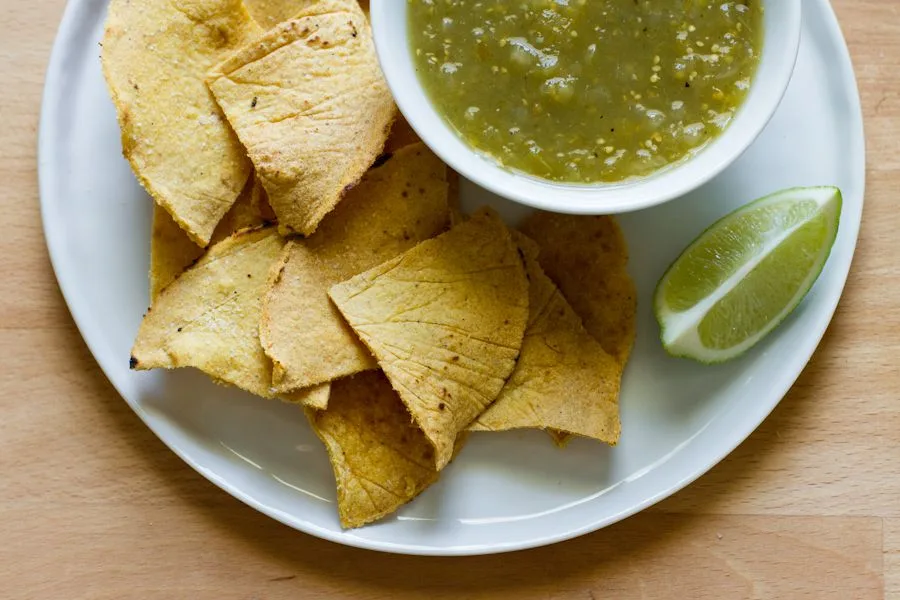
Adjust your salt level now if needed, and serve immediately alongside guacamole, salsa, or your favorite dip for the best experience.

  • 01Test one chip for a clean snap; bendy chips need more time in the oil or oven.
  • 02Flour tortillas work as a corn alternative but yield a softer, pliable chip.
  • 03Taste and adjust seasoning right before serving for the brightest flavor.

FAQ

Frequently asked questions

01What makes homemade tortilla chips taste better than store-bought?

Freshly cooked corn tortillas retain their natural sweetness and earthy flavor, which quickly fades in packaged versions. Cooking them yourself also lets you control the oil quality, salt level, and crispness for a much brighter taste.

02Can I reuse the frying oil for multiple batches?

Yes, if you strain out any burnt tortilla fragments and store the cooled oil in a sealed container. Reused oil works well for a second batch, though flavor and smoke point may gradually decrease over time.

03Why do my baked chips turn out soggy instead of crispy?

Sogginess usually comes from overcrowding the baking sheet or skipping the oil spray. The chips need space for air circulation and a thin fat coating to conduct heat evenly. Bake in a single layer and let them cool completely on the pan before handling.