How to Build Carnitas Burritos That Roll Tight and Reheat Well
Kitchen guide

How to Build Carnitas Burritos That Roll Tight and Reheat Well

A carnitas burrito usually fails for structural reasons long before the flavor goes wrong. Once the tortilla is flexible, the filling order is controlled, and the wet ingredients are kept in check, the wrap becomes much easier to roll and much better to reheat.

Arizona kitchens, cuts, and counter know-how
Published May 21, 2026
Briefing

The fix is to make a few small decisions in the right order. Warm the tortilla until it bends easily, use beans as the first layer so the pork has something to sit on, keep the wetter toppings centered, and finish with a short seam-side toast when you want a tighter handheld burrito.

The BEST Carnitas Tacos At Home

A practical YouTube walkthrough related to How to Build Carnitas Burritos That Roll Tight and Reheat Well.

  • Channel: Joshua Weissman

Video source: Joshua Weissman

Rapid read

Key takeaways

  • 01Warm the tortilla first or the burrito will crack before it ever gets rolled tight.
  • 02Spread beans under the carnitas so the filling stays anchored instead of sliding out in layers.
  • 03Keep salsa, guacamole, and other wet extras in the middle zone so the seam can close cleanly.
  • 04If you are making burritos ahead, freeze the sturdier version first and add fresh toppings after reheating.
01

Start with a tortilla that wants to roll instead of resist

A cold or under-warmed flour tortilla is the fastest way to ruin a burrito night. Even a good filling stack becomes frustrating when the wrap is stiff enough to crease instead of bend.

Give the tortilla a brief pass on a comal, skillet, or hot griddle until it softens and turns flexible. You are not trying to toast it crisp at this stage. You only want enough heat to make the wrapper cooperative.

Once the tortilla rolls easily, you can keep the rest of the process simple. Without that flexibility, every other fix arrives too late.
How to Build Carnitas Burritos That Roll Tight and Reheat Well
02

Use beans and carnitas in a filling order that builds structure

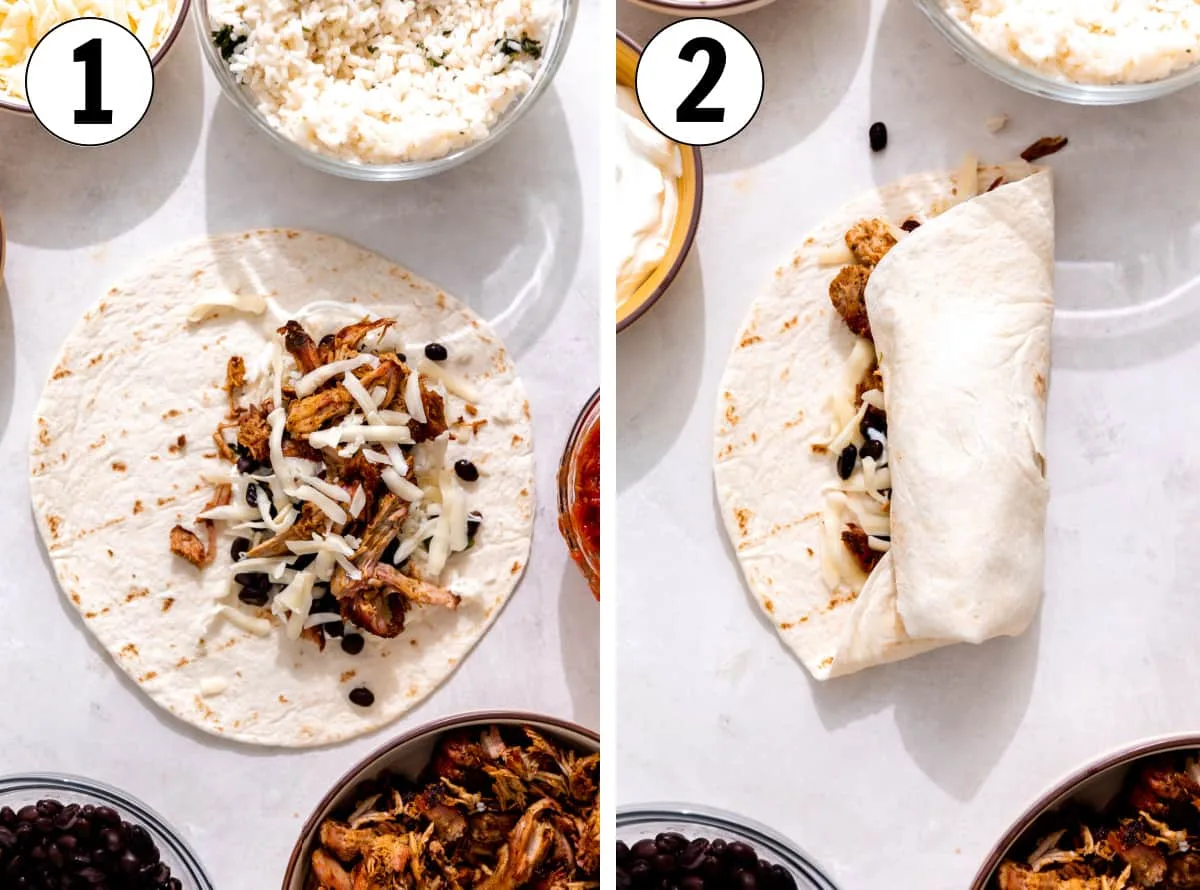
Carnitas are rich and loose by nature, so they need a base that keeps them from skating across the tortilla. A modest layer of refried beans does that job better than dropping the pork directly onto the wrap.

Set the beans slightly below center, then add hot carnitas over them. puts the heaviest fillings where the final roll can capture them instead of pushing them toward the open edge.

Cheese works best close to the hot meat, where it can soften and help the burrito settle into one layer instead of staying separate pockets of filling.

How to Build Carnitas Burritos That Roll Tight and Reheat Well
03

Keep wet toppings centered so the seam can close cleanly

Salsa, guacamole, and crema bring the lift that carnitas need, but they can also wreck the wrap when they reach too far toward the edges. The problem is not using them. The problem is spreading them like a full-width topping layer.

Treat wet toppings as a center-line accent instead of a blanket. They should brighten the bite, not soak the fold points.

If you want a burrito that travels, holds, or reheats, go lighter on the fresh wet fillings at assembly and serve extra on the side.

How to Build Carnitas Burritos That Roll Tight and Reheat Well
04

Roll below center and finish with a short seam-side toast

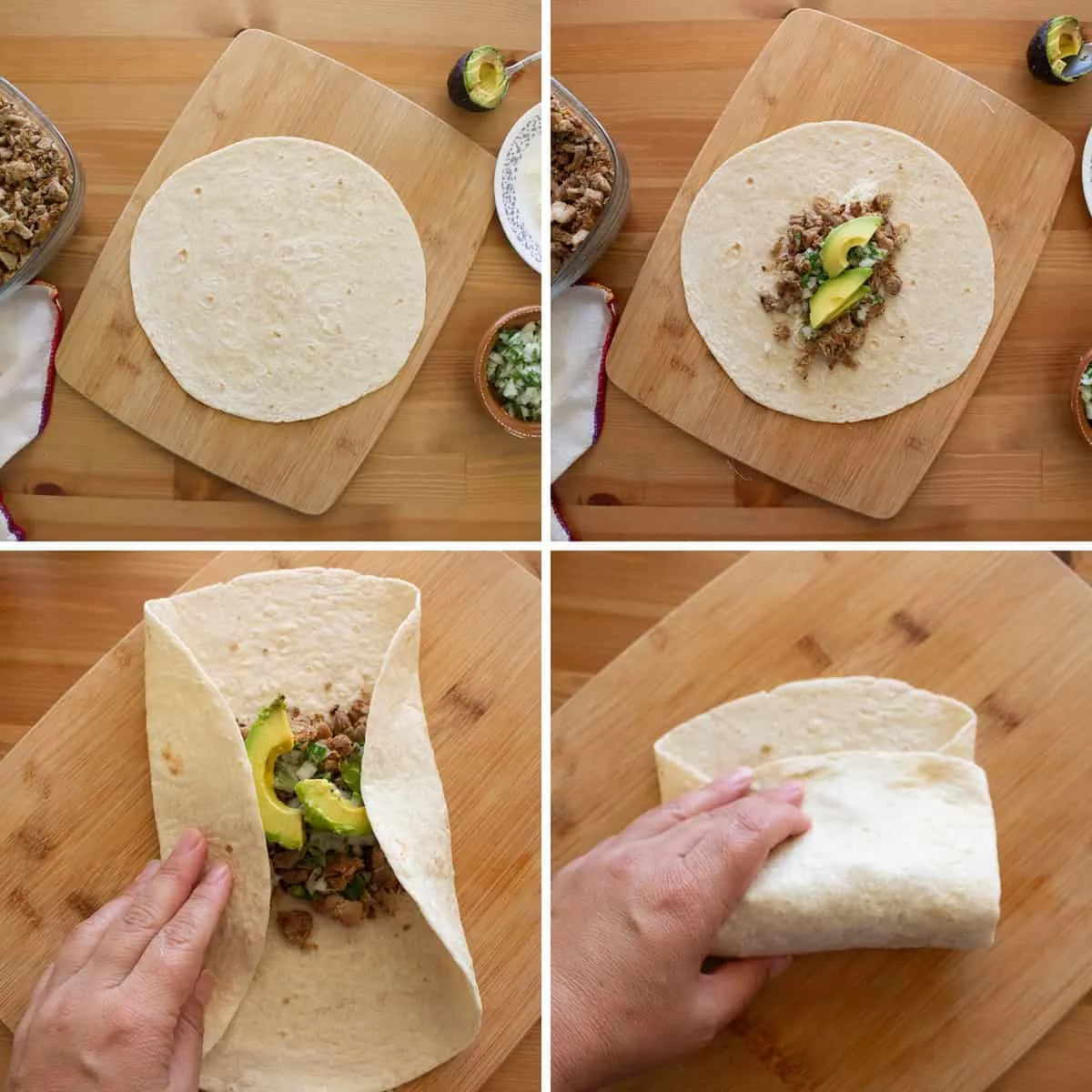
Positioning the filling slightly below center gives you room to fold the sides in before the final roll. small placement change matters because it reduces the urge to wrestle the burrito closed.

Once the sides are tucked, roll forward with steady pressure instead of squeezing hard. A compact roll holds better than an overstuffed one forced into shape.

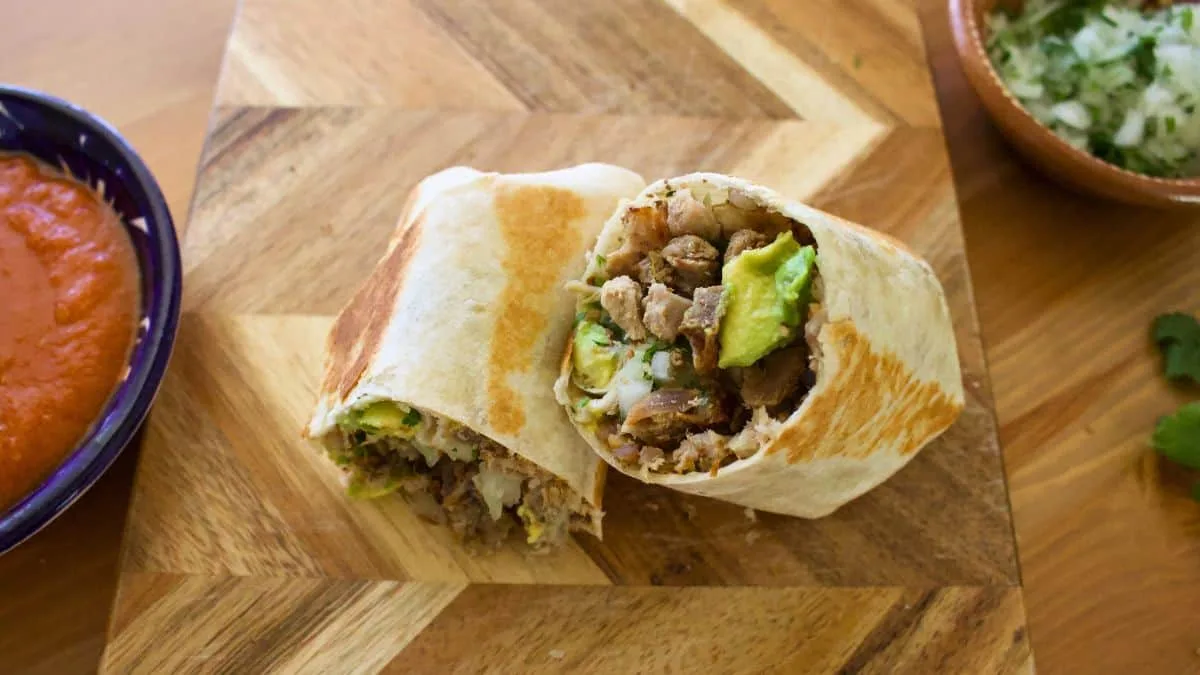
When you want a cleaner handheld finish, place the burrito seam-side down on the griddle for a brief toast. It helps the outside tighten and makes the wrap easier to cut or pack.

05

Build a make-ahead version differently from a same-night burrito

A burrito meant for tonight can carry fresh salsa and guacamole more generously because it is heading straight to the table. A freezer burrito needs a sturdier plan.

For make-ahead batches, stick to the stable parts first: tortilla, beans, carnitas, and cheese. Add the fresher wet toppings after reheating so the texture does not turn muddy in storage.

division also improves reheating. The core warms more evenly, and the fresh finish still tastes alive instead of steamed flat inside the wrap.

06

Reheat with moisture control so the tortilla stays usable

Leftover burritos usually disappoint when the tortilla dries out before the center warms through. happens most often when they are blasted too hard without any moisture buffer.

A wrapped oven reheat or a microwave pass with a damp towel gives the tortilla a better shot at staying flexible. The goal is warm and workable, not steamed into softness.

If the burrito was frozen without the wet toppings, the reheated version will hold its structure better and taste less muddy by the time you add salsa or guacamole back in.

FAQ

Frequently asked questions

01Why does my carnitas burrito split when I roll it?

Usually because the tortilla was too cool or the filling was too bulky. Warm the tortilla first and keep the filling in a tighter strip below center so it can fold instead of crack.

02What filling order works best for a carnitas burrito?

Beans first, then hot carnitas, then cheese, with wetter toppings kept toward the center. order gives the burrito a better base and reduces sliding.

03Can I make carnitas burritos ahead for the freezer?

Yes, but freeze the sturdier version with tortilla, beans, carnitas, and cheese. Add guacamole, salsa, and other fresh wet toppings after reheating for better texture.

04What is the best way to reheat a carnitas burrito?

Reheat it wrapped in the oven or with a damp towel in the microwave so the tortilla stays flexible while the center warms through. High dry heat alone often leaves the outside tough before the filling is hot.